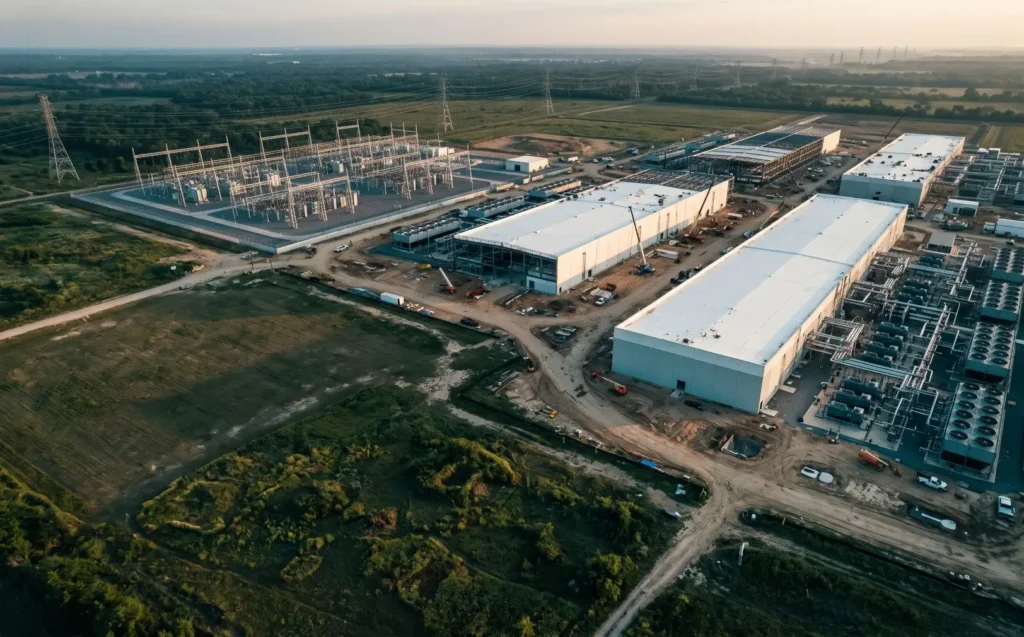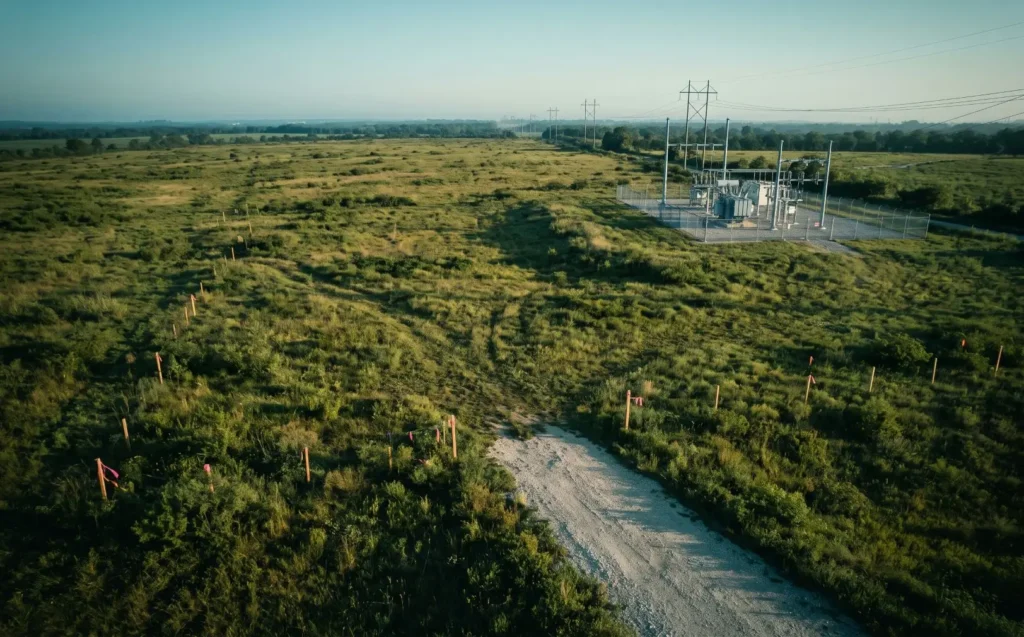
PowerTek conducted independent electrical due diligence for an enterprise colocation provider evaluating a 40-acre site for a proposed 40 MW data center development.
The property was marketed as having immediate access to 60 MW of electrical capacity through an adjacent 138 kV transmission corridor and a nearby 138/34.5 kV utility substation. The developer was considering a $12 million land acquisition and approximately $250 million in subsequent data center construction expenditure, with an initial 20 MW phase required to be energized within 18 months.
PowerTek’s four-week assessment identified substantial differences between the marketed power availability and the capacity, infrastructure investment, and delivery schedule supported by the engineering evidence.
The findings led the client to withdraw from the proposed acquisition. PowerTek subsequently supported the identification of an alternative site with a more favorable power supply position.
The Challenge: Validating Power Before Committing Development Capital
The colocation provider was expanding its capacity to serve enterprise customers, including healthcare and financial services organizations.
Its real estate team had identified a site with suitable physical characteristics and apparent proximity to significant electrical infrastructure.
The property’s marketing materials indicated that 60 MW of power could be accessed immediately, making the location appear capable of accommodating the planned 40 MW facility and its initial 20 MW development phase.
However, proximity to a high-voltage transmission line or substation does not establish that sufficient electrical capacity is available for a new large load.
Actual deliverability depends on transformer capacity, transmission loading, network configuration, interconnection requirements, equipment availability, and the utility’s ability to complete the necessary studies and infrastructure works.
With a substantial capital commitment under consideration and an 18-month energization requirement linked to an anchor tenant, the client required independent validation before proceeding.
PowerTek was engaged to conduct data center site acquisition technical due diligence, focusing on power capacity, interconnection feasibility, network upgrade costs, and realistic energization timing.
The mandate was limited to technical assessment and decision support. PowerTek was not responsible for negotiating the land purchase or determining the client’s final commercial terms.
Substation Capacity and Transmission Infrastructure Assessment
PowerTek began by examining the electrical infrastructure that had been presented as the basis for the property’s available power capacity.
The assessment included review of the nearby 138/34.5 kV utility substation, transformer loading, bus capacity, and the thermal ratings of the adjacent 138 kV transmission corridor.
PowerTek evaluated available network capacity against existing operating conditions, including peak summer loading.
The analysis identified a material limitation: the nearby substation had approximately 15 MW of available transformer capacity, compared with the 60 MW access represented in the property’s marketing materials.
The existing substation was already operating close to its applicable loading limits, leaving insufficient transformer capacity to support the proposed 40 MW development without additional infrastructure.
PowerTek also determined that the adjacent 138 kV transmission line was operating at approximately 85% of its thermal rating during peak summer conditions.
This finding raised further concerns about accommodating the proposed load without reinforcement.
The assessment therefore established that physical proximity to the existing infrastructure did not translate into immediately deliverable power at the scale required by the development.
Point of Interconnection and Network Upgrade Requirements
PowerTek evaluated potential points of interconnection and the electrical infrastructure required to serve the proposed data center.
The engineering review considered the necessary switching arrangements, voltage transformation, protection and control requirements, and the implications of connecting a new 40 MW load to the existing network.
Based on the identified capacity and transmission constraints, the assessment indicated that the development would require substantial utility infrastructure works.
These included a new 138 kV switching station, two additional 138/34.5 kV transformers, and reconductoring of approximately eight miles of the existing 138 kV transmission line.
PowerTek assessed the requirements at a planning level, distinguishing infrastructure necessary to accommodate the load from the apparent capacity represented in the initial site information.
The analysis also considered the utility’s interconnection process, including anticipated System Impact Study and Facilities Study requirements.
These findings provided the technical basis for evaluating the cost and implementation schedule of the proposed connection.
Grid Connection Cost and Capital Expenditure Validation
PowerTek developed preliminary cost estimates for the infrastructure required to connect the proposed facility.
The assessment covered the identified transmission and substation upgrades, including switching infrastructure, transformer additions, and line reinforcement.
The property’s preliminary development information suggested network upgrade costs of approximately $4 million.
PowerTek’s independent engineering assessment indicated an estimated requirement of approximately $28 million.
This represented a sevenfold difference between the initial estimate and the infrastructure costs identified through technical due diligence.
For the developer, the implications extended beyond the additional capital expenditure. The revised cost estimate affected the investment required to establish power availability and the overall economic attractiveness of the land acquisition.
PowerTek’s analysis provided a documented basis for updating the project’s infrastructure budget and assessing whether the site remained appropriate for the proposed development.
The estimates were planning-level assessments rather than final utility construction quotations or approved interconnection charges.
Energization Timeline and Supply Chain Risk
The client required energization of the initial 20 MW phase within 18 months.
PowerTek evaluated whether this timeline was consistent with the utility’s interconnection process, anticipated infrastructure works, and equipment procurement requirements.
The review identified an approximately 12-month large-load interconnection queue delay, an additional study process estimated at 10 to 14 months, and lead times of approximately 24 months for required high-voltage transformers.
The assessment also considered the sequencing of engineering, utility approvals, construction, equipment delivery, and commissioning.
PowerTek’s resulting planning assessment indicated a realistic energization timeline of approximately 30 months for the initial phase.
This was materially longer than the client’s 18-month requirement.
The revised schedule highlighted a risk that could not be resolved through changes to the land acquisition terms alone. Even if the client accepted the higher infrastructure costs, the projected power delivery timeline remained inconsistent with its original development commitments.
Acquisition Decision and Alternative Site Screening
PowerTek completed the technical due diligence assessment within the four-week engagement period.
The report identified three principal limitations affecting the proposed development:
- Available substation transformer capacity was materially below the level represented in the property marketing information.
- Transmission and substation reinforcements increased the estimated network upgrade cost from $4 million to approximately $28 million.
- The estimated 30-month energization timeline exceeded the client’s required 18-month schedule.
Based on these findings, the client withdrew from the proposed acquisition, avoiding the $12 million land purchase for a site whose power supply requirements were inconsistent with its development assumptions.
The client subsequently engaged PowerTek to undertake additional data center site selection and regional power screening.
This work identified an alternative location approximately 30 miles from the original site, with 50 MW of confirmed available capacity, a more favorable utility interconnection queue position, and an estimated energization timeline of 20 months.
The client acquired the alternative site and advanced its development planning on the basis of the revised power supply assessment.
Although the alternative offered a substantially more favorable power infrastructure position, its 20-month timeline remained separate from the original 18-month tenant requirement and would need to be addressed within the client’s commercial development plan.
Relevance to Data Center Developers and Infrastructure Investors
This engagement demonstrates PowerTek’s experience conducting electrical due diligence for data center development, including substation capacity screening, transmission infrastructure assessment, interconnection feasibility, network upgrade cost estimation, and energization timeline evaluation.
For colocation providers, enterprise data center developers, real estate investors, and infrastructure funds, these assessments are particularly relevant when evaluating sites marketed as powered, power-ready, or suitable for near-term development.
PowerTek’s approach connects electrical engineering findings with the acquisition decisions facing developers and investors.
By assessing whether the required power can be delivered within the development’s cost and schedule constraints, technical due diligence can identify unsuitable sites before substantial real estate and infrastructure commitments are made.