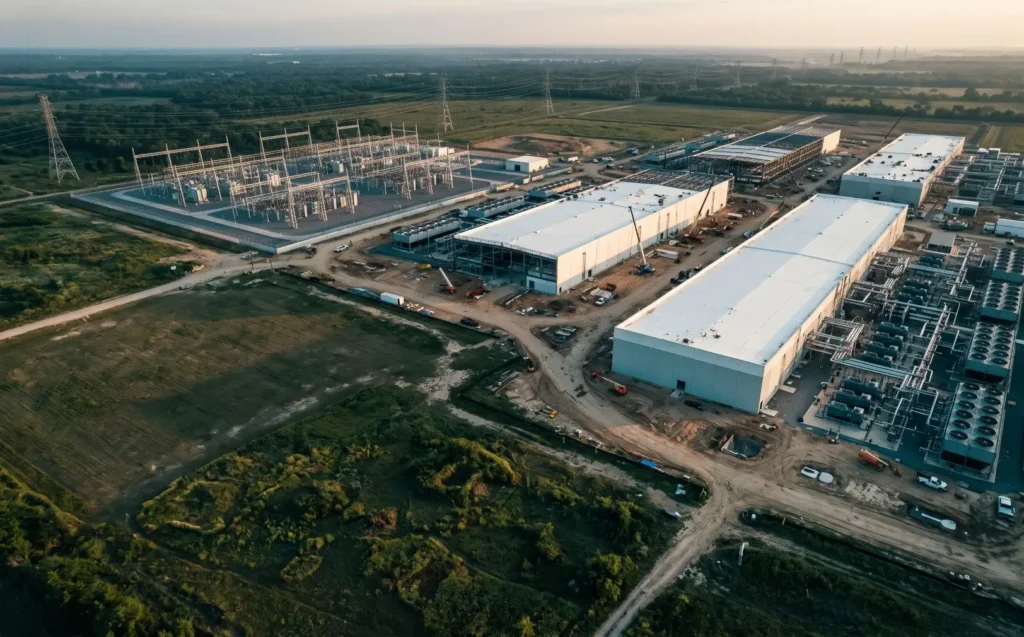
A regional transmission and distribution utility needed to determine whether its electrical network could accommodate a proposed 800 MW hyperscale data center development. The developer required 200 MW of capacity in the first year, increasing to the full 800 MW over four years. Existing substations and transmission corridors presented significant capacity constraints. PowerTek conducted an independent technical and economic assessment to evaluate interconnection feasibility, identify necessary network upgrades and establish an infrastructure development strategy consistent with the proposed energization schedule.
Project Context
The utility’s existing electrical infrastructure had been developed primarily to serve distributed commercial loads. The proposed data center would introduce a substantially larger, concentrated demand requiring a different approach to network planning and capacity allocation.
The developer’s phased energization requirements added a critical scheduling consideration. The utility needed to determine whether the initial 200 MW could be supplied within the required timeframe, while establishing a technically viable route to the full 800 MW capacity.
The assignment required an integrated assessment of existing network capability, connection alternatives, capital investment requirements and the implications for system reliability.
Engineering Challenges and Network Constraints
The primary constraints were insufficient capacity at existing substations and thermal loading limitations on surrounding transmission corridors.
The assessment needed to establish how the proposed load would affect transformer loading, transmission line utilization, voltage performance and system operation under normal and N-1 contingency conditions.
Short-circuit levels and protection coordination also required evaluation to determine the implications of introducing a large new connection to the existing network.
Beyond technical feasibility, the utility needed to understand which infrastructure reinforcements were necessary, whether they could be delivered within the developer’s schedule, and how investment requirements would change as the facility expanded.
PowerTek’s Engineering Approach
Transmission and Distribution Network Modeling
PowerTek developed a transmission and distribution system model incorporating the proposed data center’s load characteristics and phased capacity requirements.
The assessment considered the existing network configuration, infrastructure condition, available substation capacity and transmission corridor limitations. The developer’s planned increase from 200 MW to 800 MW was incorporated into the analysis to evaluate the network’s ability to accommodate successive stages of demand.
PowerTek performed point of interconnection (POI) capacity assessments and evaluated transformer thermal limits to identify constraints affecting the initial connection and subsequent capacity additions.
Power Flow, Contingency and Protection Studies
The engineering team conducted load flow and short-circuit studies, together with protection coordination assessments, to evaluate the effects of the proposed interconnection.
Active and reactive power flows were analyzed under normal operating conditions and N-1 contingencies. The studies examined transmission loading, voltage profiles, fault-current levels and the ability of the network to accommodate the proposed load without compromising applicable planning criteria.
PowerTek also evaluated reactive power requirements and potential compensation measures, recognizing the importance of voltage performance and reliable electrical supply for a large data center facility.
The analysis identified transmission constraints requiring mitigation and assessed the proposed interconnection against applicable regional grid planning and reliability requirements.
Interconnection Alternatives and Capital Investment Assessment
PowerTek developed and compared two principal infrastructure alternatives.
The first involved rebuilding and reinforcing the existing distribution network, including upgrades to local feeders and substations.
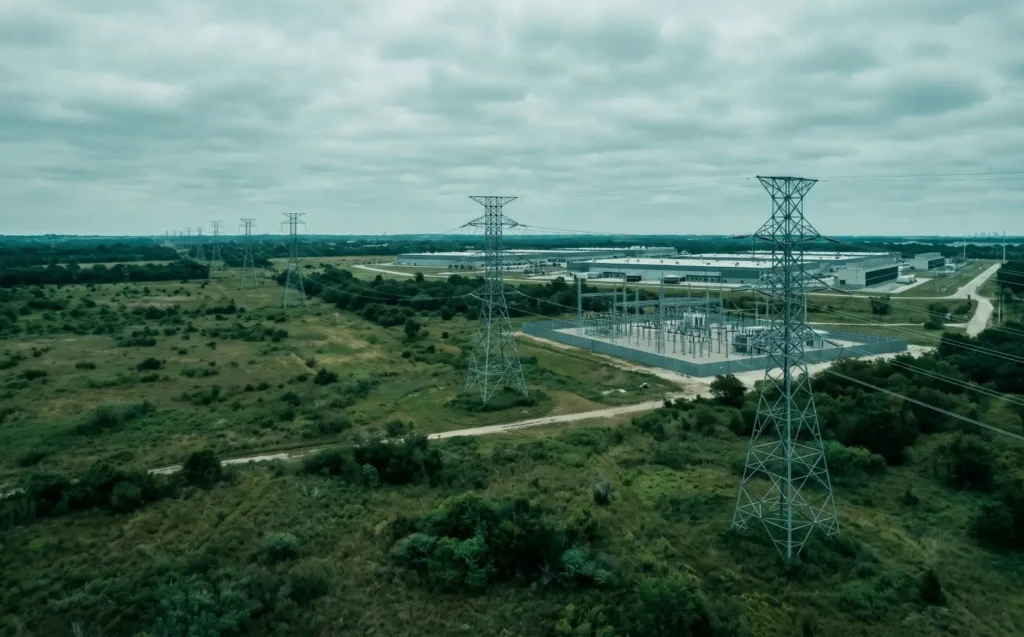
The second involved a dedicated high-voltage transmission interconnection, incorporating a new switching station and a direct connection to the regional bulk power system.
Both alternatives were evaluated from technical and economic perspectives, including infrastructure requirements, capital expenditure, reliability considerations and the ability to support the developer’s phased energization schedule.
PowerTek developed engineering specifications for the proposed switching station and a prioritized capital improvement plan. The assessment established implementation requirements and investment sequencing associated with the staged increase in electrical demand.
Findings and Decisions Supported
The assessment determined that accommodating the proposed load through the existing distribution network would require extensive infrastructure upgrades, including reinforcement of multiple substations. The associated implementation requirements were incompatible with the developer’s initial energization schedule.
The dedicated high-voltage transmission alternative required greater upfront capital investment but offered a more suitable technical and implementation strategy for meeting the phased capacity requirements.
PowerTek’s analysis provided the engineering and economic basis for the utility’s decision to approve the dedicated transmission interconnection approach.
The resulting infrastructure recommendations also informed negotiations between the utility and developer regarding interconnection cost allocation and a binding agreement.
The project advanced with a defined infrastructure development strategy for the proposed progression from 200 MW to 800 MW, including identified network improvements, investment priorities and implementation requirements.
Relevance to Future Data Center Developments
Large data center interconnections require an assessment of more than nominal electrical capacity. The feasibility of a site depends on network constraints, reinforcement requirements, reliability criteria, capital costs and the time required to make capacity available.
This assignment demonstrates PowerTek’s experience in evaluating these interdependent factors and translating power system analysis into infrastructure decisions for utilities and large-load developers.