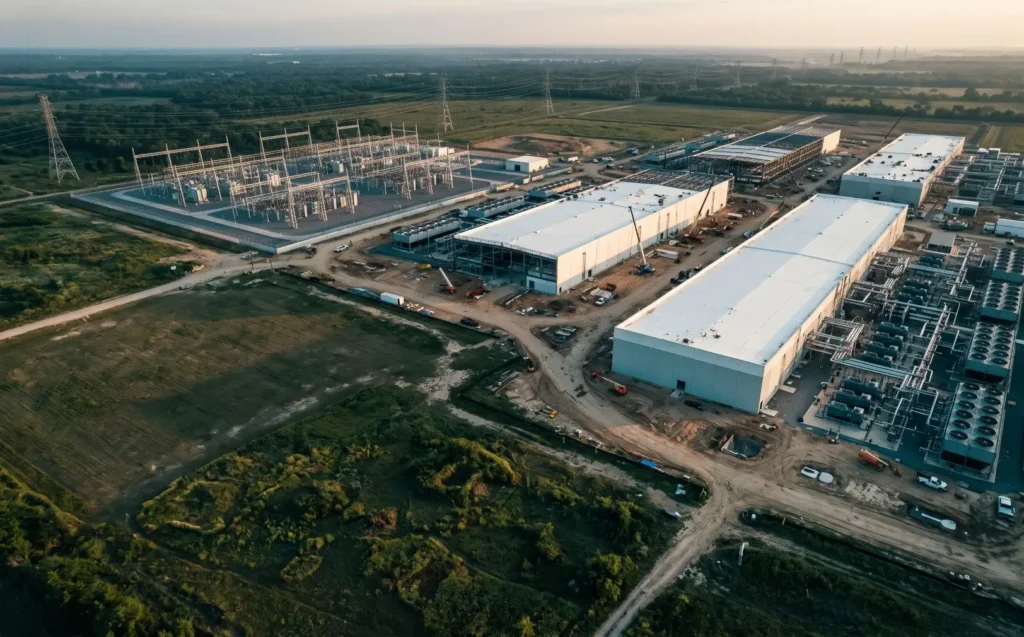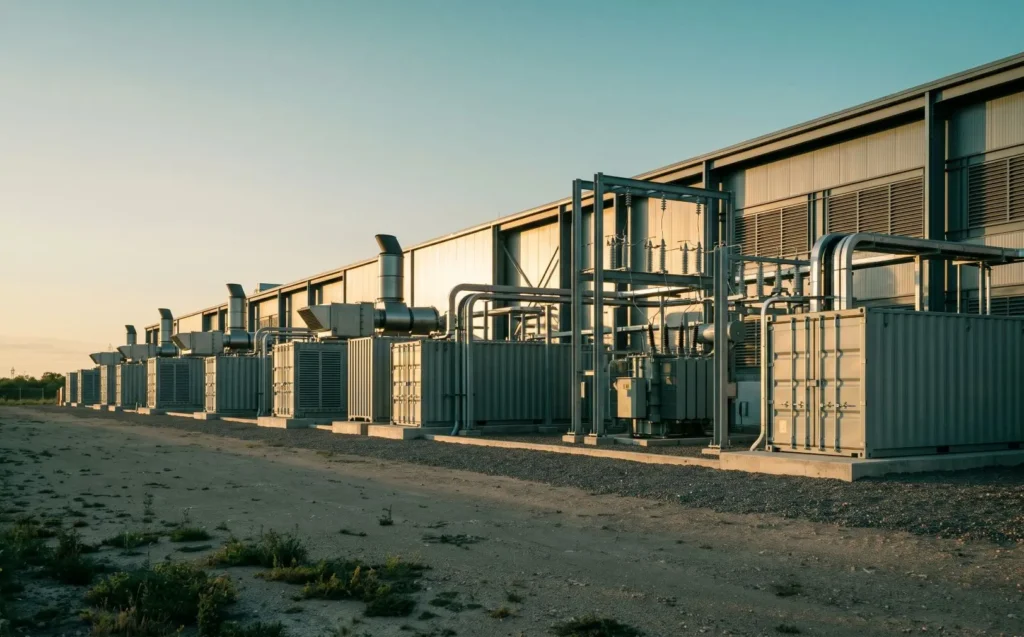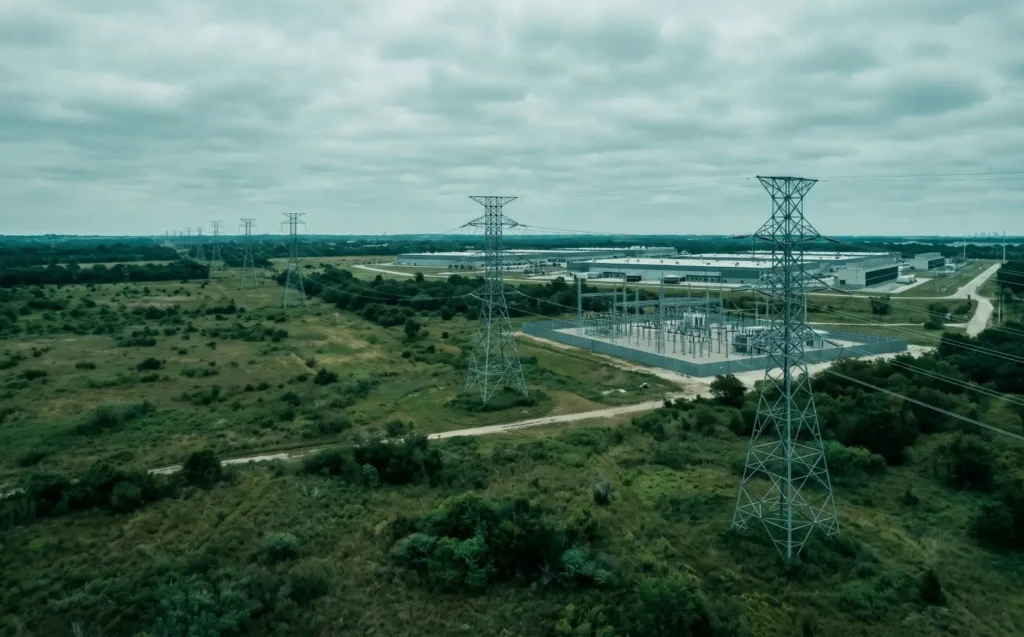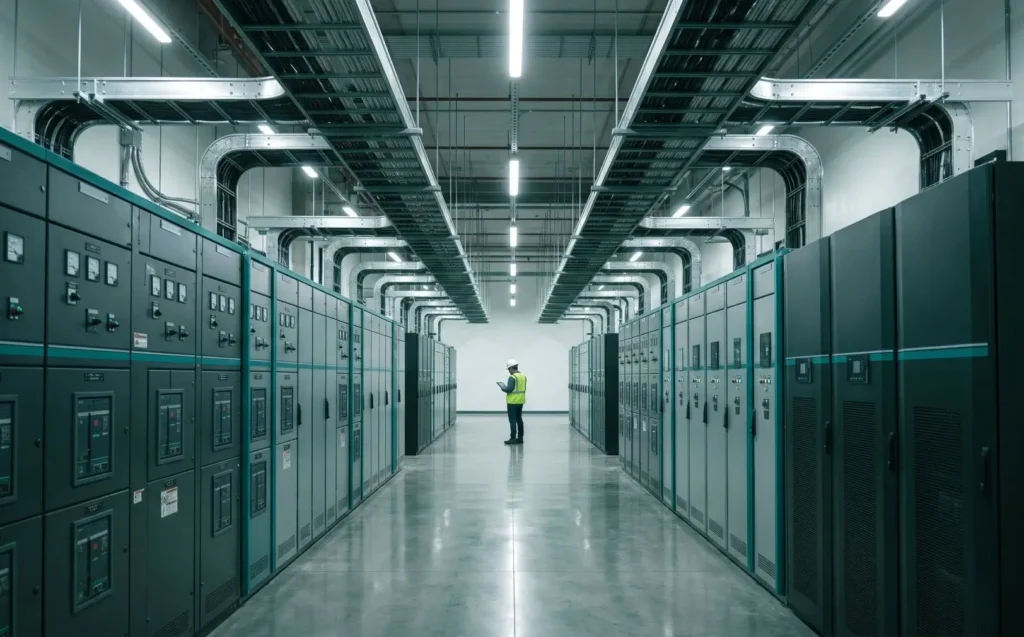
A global hyperscale data center developer required independent validation of its electrical infrastructure before authorizing final construction investment for a new multi-building campus. Although preliminary engineering was complete, the investment committee needed assurance that the proposed redundancy architecture, backup generation systems and protection arrangements would meet stringent operational availability requirements. PowerTek was engaged to assess the mission-critical electrical design, evaluate potential single points of failure, and oversee commissioning tests intended to demonstrate the performance of the facility’s primary and backup power systems.
Project Context and Reliability Requirements
For a hyperscale data center, electrical infrastructure must support continuous computing operations while allowing equipment faults, maintenance activities and utility disturbances to be managed without unacceptable service interruption.
The developer’s preliminary design incorporated redundant electrical distribution paths, uninterruptible power supply (UPS) systems and emergency generation. Before releasing construction capital, the investment committee required independent confirmation that the proposed configurations would perform as intended under normal conditions, equipment failures and loss of utility supply.
The assignment also needed to establish whether the design supported the facility’s service-level commitments and applicable data center resilience requirements, including the relevant Tier III and Tier IV design criteria.
Electrical Redundancy and System Constraints
The principal engineering challenge was to identify potential failure modes across an interconnected electrical distribution system serving multiple buildings and high-density computing loads.
The proposed 2N electrical distribution design required independent power paths, with N+1 redundancy incorporated where specified at the equipment or subsystem level. Both arrangements needed assessment for common-mode vulnerabilities, protection selectivity and equipment dependencies.
Additional considerations included UPS power quality, generator synchronization, switchgear fault-duty ratings, transient voltage and frequency behavior, and the coordination of protective devices across medium- and low-voltage networks.
The developer also required physical commissioning evidence to substantiate the electrical system’s performance under defined operating and failure scenarios.
PowerTek’s Engineering Approach
2N Electrical Distribution and Redundancy Assessment
PowerTek performed an independent review of the campus electrical distribution architecture, examining the separation and independence of the proposed redundant power paths.
The engineering team assessed the 2N and N+1 arrangements to identify potential single points of failure, shared dependencies and equipment configurations that could compromise electrical continuity.
The review included power distribution units (PDUs), remote power panels, medium- and low-voltage distribution equipment, and the interfaces between primary and standby electrical systems.
PowerTek evaluated the proposed electrical topology and fault-tolerance arrangements to determine how individual equipment failures could affect adjacent distribution paths and critical loads.
The assessment provided the developer with an independent engineering basis for evaluating the adequacy of its redundancy design before final capital authorization.
UPS Integration, Backup Generation and Dynamic Performance
PowerTek assessed the integration of uninterruptible power supplies and emergency generation within the facility’s electrical distribution system.
The review addressed UPS operating characteristics, harmonic distortion and power quality requirements for sensitive computing equipment.
The engineering team evaluated emergency generator synchronization, load rejection and transient operating conditions, including the response of the electrical system to a loss of utility supply.
Dynamic stability and transient power quality assessments examined voltage and frequency performance during the transition to backup generation.
Particular attention was given to the role of UPS systems in maintaining critical-load supply during the interval required for emergency generators to start, synchronize where applicable, and accept load.
These assessments supported the design of the backup power interface and the commissioning procedures required to verify its performance.
Protection Coordination, Switchgear and Electrical Safety
PowerTek conducted short-circuit and fault-level analysis to evaluate equipment duty requirements and protective device coordination throughout the electrical distribution network.
The assessment included medium- and low-voltage switchgear specifications, breaker interrupting and withstand capabilities, and the suitability of equipment ratings for prospective fault currents.
Protective relay coordination studies examined the selective operation of overcurrent devices, with the objective of isolating electrical faults while limiting unnecessary interruption to unaffected critical loads.
PowerTek also performed arc-flash hazard assessments and evaluated mitigation measures, including ground-fault protection and arc-energy reduction techniques.
The resulting engineering recommendations addressed equipment protection, personnel safety and the operational reliability of the distribution system.
Commissioning and Integrated Systems Testing
PowerTek’s engagement extended beyond design validation to oversight of commissioning and integrated systems testing.
The testing program included load-bank testing of backup generation equipment and coordinated verification of the interfaces between UPS systems, automatic transfer equipment, emergency generators and electrical distribution controls.
Controlled utility-loss simulations were used to evaluate the facility’s response to the interruption of external power, including transfer sequences, UPS support and generator load acceptance.
The commissioning process examined whether the installed systems operated according to the specified control sequences and electrical performance requirements.
Test evidence was reviewed alongside the design documentation and applicable resilience criteria, providing a basis for the developer’s assessment of operational readiness.
Findings and Investment Outcome
PowerTek’s independent assessment addressed the principal electrical reliability risks associated with the proposed campus, including redundant distribution paths, backup generation interfaces, protection coordination and equipment fault duties.
The combination of design validation, engineering studies and integrated systems testing provided technical evidence supporting the developer’s capital investment and operational readiness decisions.
PowerTek also assessed electrical infrastructure lifecycle and reliability costs, helping connect technical design considerations with the developer’s long-term operating commitments and service-level requirements.
Following the engineering validation and commissioning process, the developer secured project financing and advanced the campus into commercial operation.
The assignment established a documented technical basis for the facility’s electrical resilience arrangements and the performance of its mission-critical power infrastructure under the tested operating conditions.
Relevance to Comparable Data Center Developments
Hyperscale data center electrical reliability depends on more than the provision of redundant equipment. Distribution architecture, protection selectivity, UPS integration, backup generation and control-system behavior must function together under defined operating and failure conditions.
This assignment demonstrates PowerTek’s experience in independently assessing these interdependencies and translating detailed electrical engineering and commissioning evidence into decisions concerning capital investment, operational readiness and facility reliability.