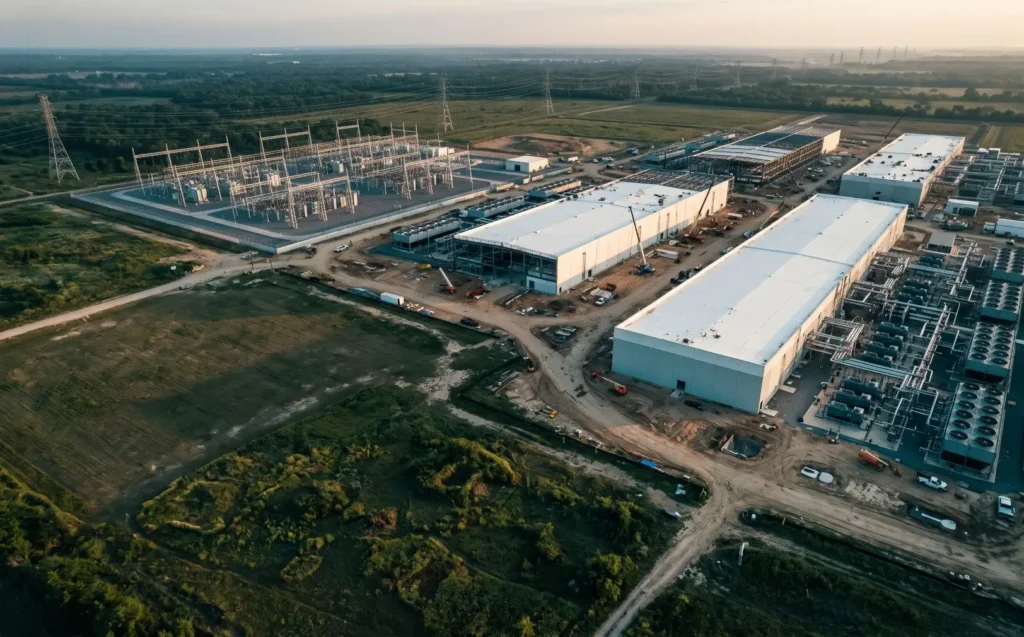
A hyperscale data center developer required 600 MW of electricity for a new multi-building campus, but the local utility could not provide the necessary capacity within the construction schedule without substantial network upgrades. The developer needed a power procurement strategy that addressed both the timing of electricity availability and the long-term cost of supply. PowerTek evaluated three delivery alternatives, assessed utility tariff exposure, examined infrastructure investment requirements and supported negotiations over interconnection costs. The work established a preferred power supply arrangement and the financial basis for its implementation.
Project Context and Commercial Requirements
The developer’s initial utility supply proposal involved significant transmission and distribution upgrades, creating uncertainty over connection timing and the capital contribution required from the project.
Alternative arrangements offered different trade-offs. Remote generation delivered through the transmission network could reduce initial infrastructure expenditure but introduce ongoing wheeling charges. A dedicated transmission connection could require greater upfront investment while offering a different long-term cost and reliability profile.
The developer needed to establish the economic consequences of each arrangement over a 20-year period, including utility tariffs, network costs, capital requirements and exposure to future rate changes.
The analysis also needed to determine which infrastructure costs were appropriately attributable to the data center.
Power Delivery and Infrastructure Constraints
The assessment required PowerTek to consider electricity procurement and grid infrastructure as related investment decisions.
The principal engineering questions concerned the infrastructure needed to deliver 600 MW, the capacity and reliability implications of each connection arrangement, and the extent of transmission and distribution reinforcement required.
Commercial considerations included demand charges, time-of-use tariffs, transmission losses, wheeling charges, future rate adjustments and the allocation of network upgrade costs.
These variables had different effects on initial capital commitments and subsequent operating expenditure. A credible comparison therefore required consistent treatment of infrastructure scope, electricity delivery costs and long-term financial assumptions across all three options.
PowerTek’s Engineering and Commercial Approach
Evaluation of Three Power Supply Alternatives
PowerTek evaluated three principal data center power procurement alternatives:
1. Local utility supply: Connection through the existing utility system, supported by negotiated network reinforcements and associated capital investment.
2. Remote generation with power wheeling: Electricity supplied from a dedicated generation facility and delivered through the transmission network under a wheeling arrangement.
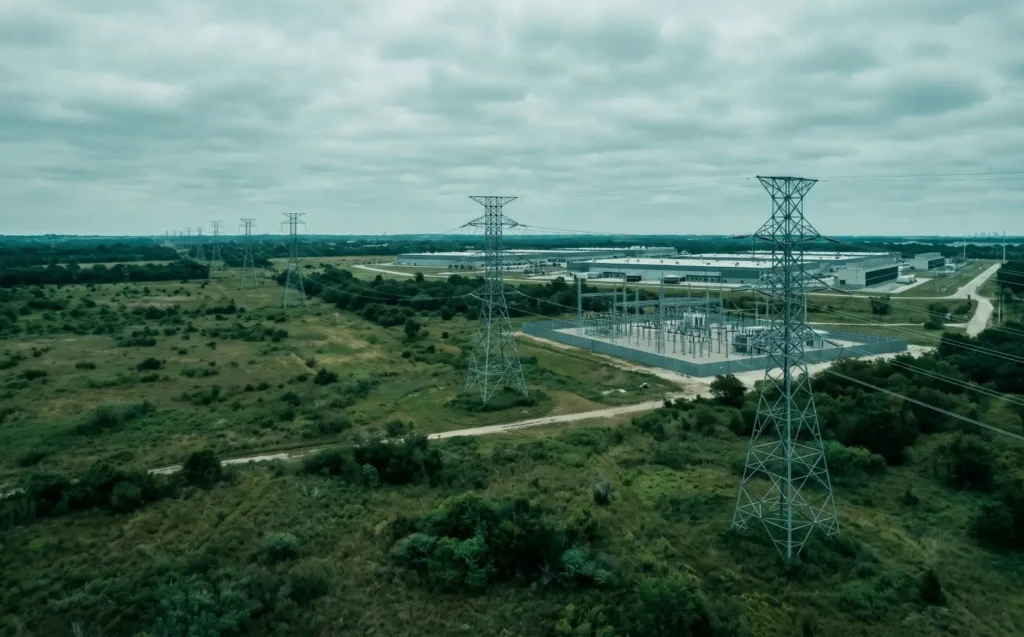
3. Direct transmission interconnection: A dedicated connection to a new regional transmission node, with the associated infrastructure developed to serve the campus.
The assessment compared the capital requirements, electricity delivery costs, network losses, reliability considerations and implementation implications of each arrangement.
For the remote generation option, PowerTek examined wheeling tariffs and transmission use-of-system costs alongside the technical implications of relying on the intervening network.
The direct connection alternative was evaluated against the local utility’s proposed reinforcement program and the cost of establishing dedicated infrastructure.
Utility Tariff Analysis and Long-Term Cost Modeling
PowerTek conducted a detailed utility tariff and rate structure analysis to establish the financial implications of each supply option.
The work included rate benchmarking and an evaluation of the local utility’s proposed pricing structure. PowerTek modeled time-of-use charges, demand charges and projected tariff escalation over a 20-year planning horizon.
These assumptions were incorporated into a comparative techno-economic model covering initial infrastructure investment, ongoing electricity charges and relevant operating costs.
The analysis applied net present value (NPV) methods to compare the alternatives on a consistent financial basis.
This provided the developer with a long-term view of power procurement costs, including the sensitivity of operating expenditure to utility tariffs and the recurring charges associated with wheeled electricity.
The modeling also informed the campus power development plan by connecting supply costs and capital requirements to the proposed infrastructure configuration.
Interconnection Infrastructure and Capital Cost Allocation
PowerTek reviewed the utility’s proposed transmission and distribution improvements, including the assumed infrastructure scope, capital estimates and allocation of upgrade costs.
The assessment identified material overstatements in the utility’s initial capital estimates and provided an engineering and economic basis for challenging the proposed investment requirements.
PowerTek developed a revised capital cost allocation framework that distinguished facilities required specifically for the data center from broader utility network improvements.
The framework supported allocating a substantial portion of shared infrastructure investment to the utility’s general rate base rather than charging the full amount to the developer.
This distinction was central to the economic comparison. The financial attractiveness of a connection arrangement depended not only on the total cost of the necessary infrastructure, but also on the share funded directly by the project.
Commercial Negotiations and Implementation Strategy
PowerTek supported the developer’s interconnection agreement and cost allocation negotiations, providing technical justification for the proposed infrastructure scope and associated capital contributions.
The comparative analysis established that the wheeling alternative offered lower initial capital expenditure but carried less favorable long-term operating costs and reliability considerations under the evaluated assumptions.
The optimized direct utility interconnection provided a more attractive overall economic arrangement.
PowerTek’s recommendations informed the final infrastructure configuration, the developer’s capital commitments and the commercial terms governing the connection.
Findings and Commercial Outcome
The assessment identified the optimized direct utility interconnection as the preferred solution for the 600 MW campus.
PowerTek’s review demonstrated that the initial utility reinforcement estimates were overstated and that a revised allocation of network improvement costs materially improved the developer’s economic position.
The 20-year financial comparison also established that the lower initial capital requirements of power wheeling were outweighed by its longer-term cost and reliability disadvantages relative to the selected connection arrangement.
The developer proceeded with PowerTek’s recommended infrastructure strategy and secured a binding interconnection agreement.
The agreed commercial framework limited the developer’s infrastructure capital exposure to the direct facilities required for the campus, while broader network investment was allocated through the utility framework.
The resulting agreement established a defined connection strategy and a more predictable long-term cost structure to support the development’s investment planning.
Relevance to Comparable Data Center Developments
For large data center developments, the lowest-cost electricity supply arrangement cannot be determined from utility energy rates or initial interconnection costs alone.
Transmission investment, tariff design, wheeling charges, network upgrade allocation and delivery requirements can materially change the economics of competing supply arrangements.
This assignment demonstrates PowerTek’s ability to integrate infrastructure engineering, utility rate analysis and commercial negotiation support into a single power procurement assessment.