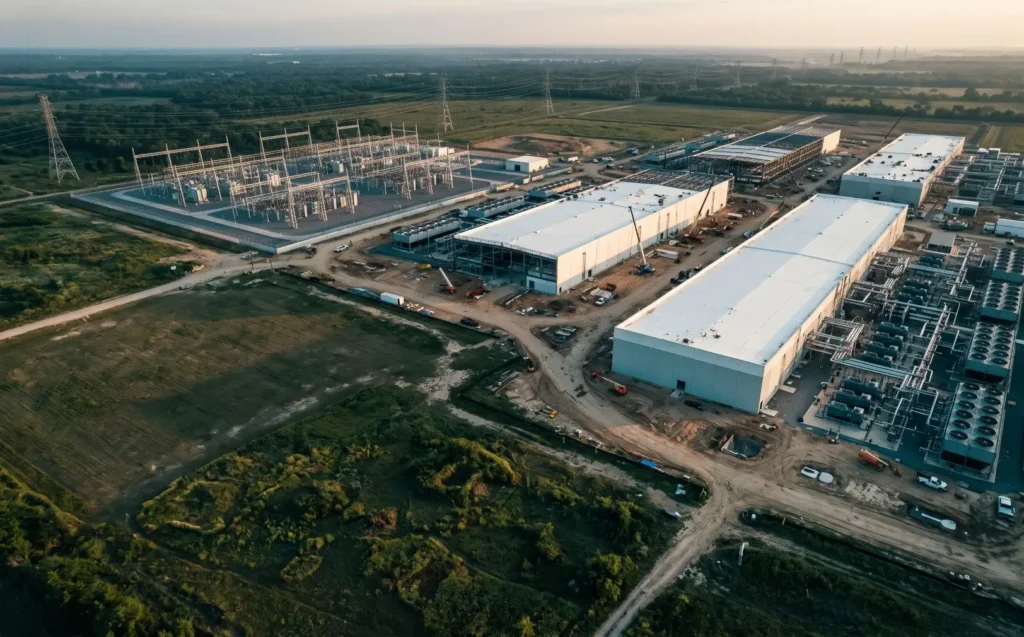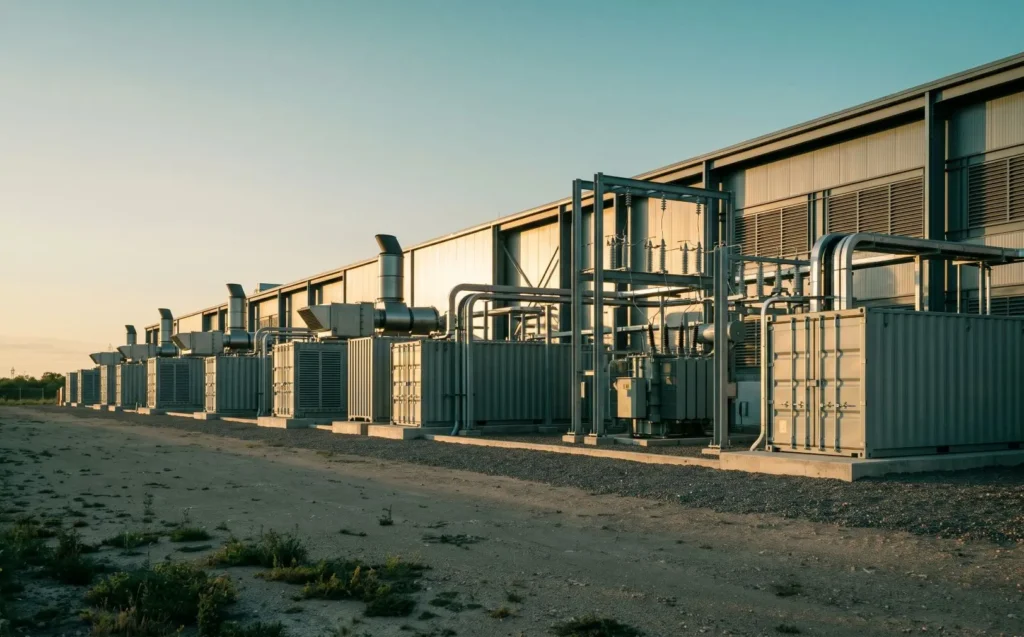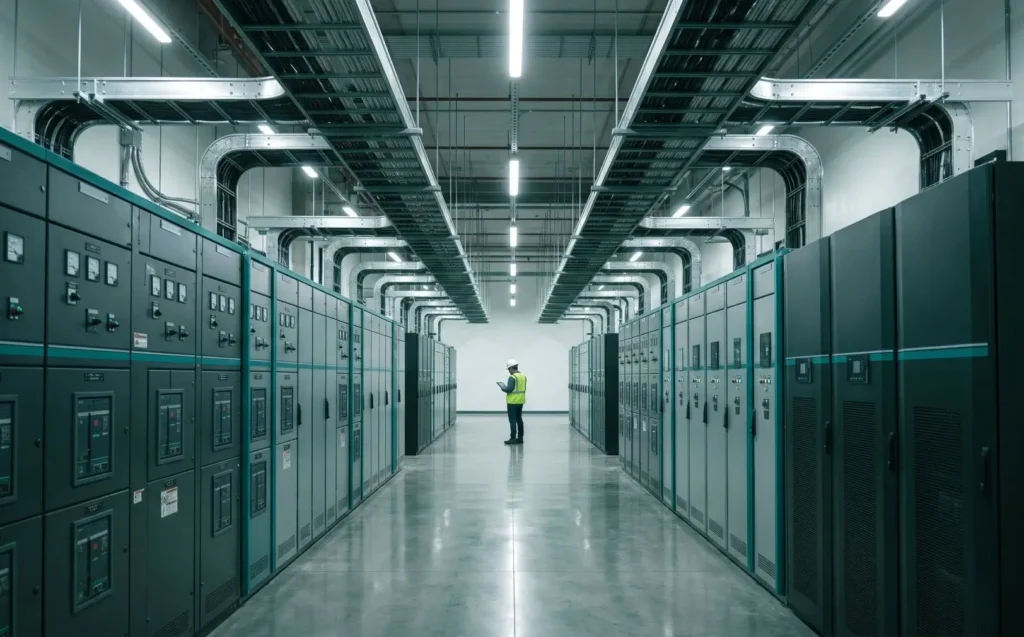
PowerTek supported a data center developer evaluating potential sites for a new 20–50 MW facility, combining land sourcing with independent electrical infrastructure feasibility assessments.
The engagement focused on a critical development question: which candidate sites could offer a technically credible path to the required electrical capacity within the project’s commercial schedule?
PowerTek worked with real estate specialists and land brokerage partners to identify candidate properties, then assessed the surrounding transmission and distribution infrastructure, upstream network constraints, potential connection arrangements, and requirements for phased power delivery.
The analysis identified material differences in the electrical feasibility of the shortlisted sites and informed the developer’s selection of a preferred location for further utility engagement and development planning.
The Challenge: Finding Land with a Credible Path to Power
The developer was seeking a suitable location for a 20–50 MW data center, with an emphasis on securing electricity supply within a defined development schedule.
Land availability was only one part of the decision. A property could have adequate space and favorable acquisition economics yet still require substantial electrical infrastructure upgrades before the proposed facility could be energized.
Similarly, proximity to an existing transmission line or substation did not establish that sufficient capacity was available to serve the intended load.
The developer needed to understand whether candidate locations could accommodate the proposed electricity demand, what infrastructure would be required, and whether the resulting connection arrangements were compatible with its development timetable.
These questions were particularly important because data center construction could not be planned independently of the utility’s network capacity, interconnection study requirements, and infrastructure delivery schedule.
PowerTek was engaged to provide data center site selection and power feasibility advisory services, integrating potential site identification with a technical assessment of the available electricity infrastructure.
The objective was to identify development options supported by credible engineering evidence and distinguish them from locations where network constraints could make the proposed project difficult or uneconomic to advance.
Integrating Site Sourcing with Electrical Feasibility
PowerTek’s mandate extended beyond conventional grid connection analysis to include identification of potential development sites.
Working with internal real estate specialists and land brokerage partners, PowerTek identified candidate parcels for assessment against the developer’s electrical requirements.
The site screening process considered the location of existing transmission and distribution infrastructure, potential connection points, and the technical characteristics of the surrounding electricity network.
Rather than evaluating real estate and electricity supply as separate workstreams, PowerTek incorporated electrical feasibility into the site selection process.
This approach allowed candidate properties to be assessed in terms of their potential to support the proposed facility, the infrastructure needed to establish a connection, and the implications for development timing.
Sites with attractive land characteristics but significant upstream network limitations could therefore be distinguished from alternatives with a more credible power supply pathway.
The resulting assessment provided a basis for narrowing the development options before substantial resources were committed to land acquisition and detailed engineering.
Transmission and Distribution Capacity Assessment
PowerTek conducted preliminary transmission and distribution system modeling and large-load assessments for the shortlisted properties.
The work examined the configuration and capacity of the surrounding electricity infrastructure, including upstream substations, transmission connections, and distribution network arrangements.
Particular attention was given to identifying constraints that could affect the ability of the network to accommodate an additional 20–50 MW of demand.
These included potential limitations in substation capacity, transmission system loading, and the infrastructure available to connect the proposed facility.
PowerTek evaluated the relationship between the proposed load and the existing network configuration to identify where reinforcement or changes to the connection arrangement might be necessary.
The analysis provided an independent engineering perspective on potential load-serving capability, rather than relying solely on the presence of nearby power infrastructure.
It also identified matters requiring further assessment through the host utility’s formal connection process.
Phased Power Requirements and Connection Alternatives
Recognizing that the data center could be developed and energized in phases, PowerTek evaluated the implications of incremental load growth.
The analysis considered how initial electricity demand and subsequent expansion toward full build-out would interact with the available network capacity.
This distinction was important because a connection arrangement capable of supporting an initial development phase might not be sufficient for the facility’s ultimate load.
PowerTek assessed potential connection alternatives, including the infrastructure required to accommodate the proposed demand over successive development stages.
The review considered possible reinforcement measures such as additional transformer capacity, transmission line upgrades, substation modifications, and alternative distribution connection arrangements.
These measures were examined as potential responses to identified network constraints, rather than assumed requirements for every candidate site.
The objective was to establish how different connection configurations could affect technical feasibility, infrastructure investment, and the sequence of development.
This provided the developer with a clearer understanding of the decisions necessary to establish an initial power supply and accommodate future capacity expansion.
Comparing Site Alternatives and Power Availability Risks
PowerTek consolidated the electrical findings into a comparative assessment of the shortlisted properties.
The evaluation considered the technical limitations of each site, the likely extent of network reinforcement, the relative complexity of connection arrangements, and their implications for the development schedule.
The findings revealed important trade-offs between land economics and electrical infrastructure feasibility.
One candidate site offered favorable real estate characteristics but faced upstream transmission constraints that created a material risk to the proposed development timetable.
A second site required a more complex distribution connection arrangement but benefited from stronger upstream transmission capacity, offering a more credible route to serving the proposed load within the client’s schedule.
The comparison highlighted why selecting a data center location based on land cost or proximity to high-voltage infrastructure alone could lead to an incomplete assessment of development feasibility.
PowerTek’s analysis distinguished between locations where the network appeared capable of accommodating the proposed demand with more limited intervention and alternatives involving substantial utility infrastructure upgrades.
This provided the developer with a structured basis for evaluating the technical and investment implications of each site.
Preferred Site Selection and Utility Coordination
PowerTek’s engineering findings informed the developer’s selection of a preferred site for further development.
The preferred option offered a more favorable balance between load-serving capability, connection requirements, and development timing than the other evaluated alternatives.
Following the assessment, the developer initiated targeted utility coordination to advance the preferred connection arrangement and clarify the formal studies required.
PowerTek’s work provided technical support for these discussions, including the preliminary network assessment, potential infrastructure requirements, and connection alternatives.
The analysis also informed the developer’s consideration of land acquisition terms and future electrical infrastructure expenditure.
The engagement therefore connected site sourcing, preliminary power system engineering, and development planning within a single decision process.
Deliverables and Development Value
PowerTek delivered a preliminary power feasibility assessment covering candidate site screening, transmission and distribution network analysis, upstream capacity constraints, phased load requirements, and potential connection alternatives.
The assessment identified the principal electrical limitations affecting the shortlisted properties and established a comparative basis for evaluating their development suitability.
Its recommendations informed the developer’s site selection and provided a technical starting point for subsequent utility coordination and interconnection studies.
The principal value was the ability to compare potential development locations on the basis of credible electrical infrastructure considerations before advancing major capital commitments.
The analysis remained preliminary. It did not constitute a formal utility commitment to provide power, a completed interconnection approval, or a guaranteed energization date.
Final connection capacity, network upgrade requirements, and delivery schedules remained subject to utility studies, relevant approvals, and subsequent engineering.
Relevance to Data Center Developers and Powered Site Investors
This engagement demonstrates PowerTek’s experience combining data center site sourcing with large-load power feasibility, transmission and distribution network assessment, and connectiono strategy development.
For data center developers, colocation providers, landowners, and infrastructure investors, this approach is relevant when evaluating potential sites for new electricity-intensive facilities or assessing whether a property has a credible path to becoming a powered development site.
PowerTek supports these decisions by examining the electrical infrastructure behind a prospective location, identifying constraints that may affect power delivery, and assessing alternatives for accommodating phased development.