
Why Interconnection Costs and Delays Have Become a Critical Risk
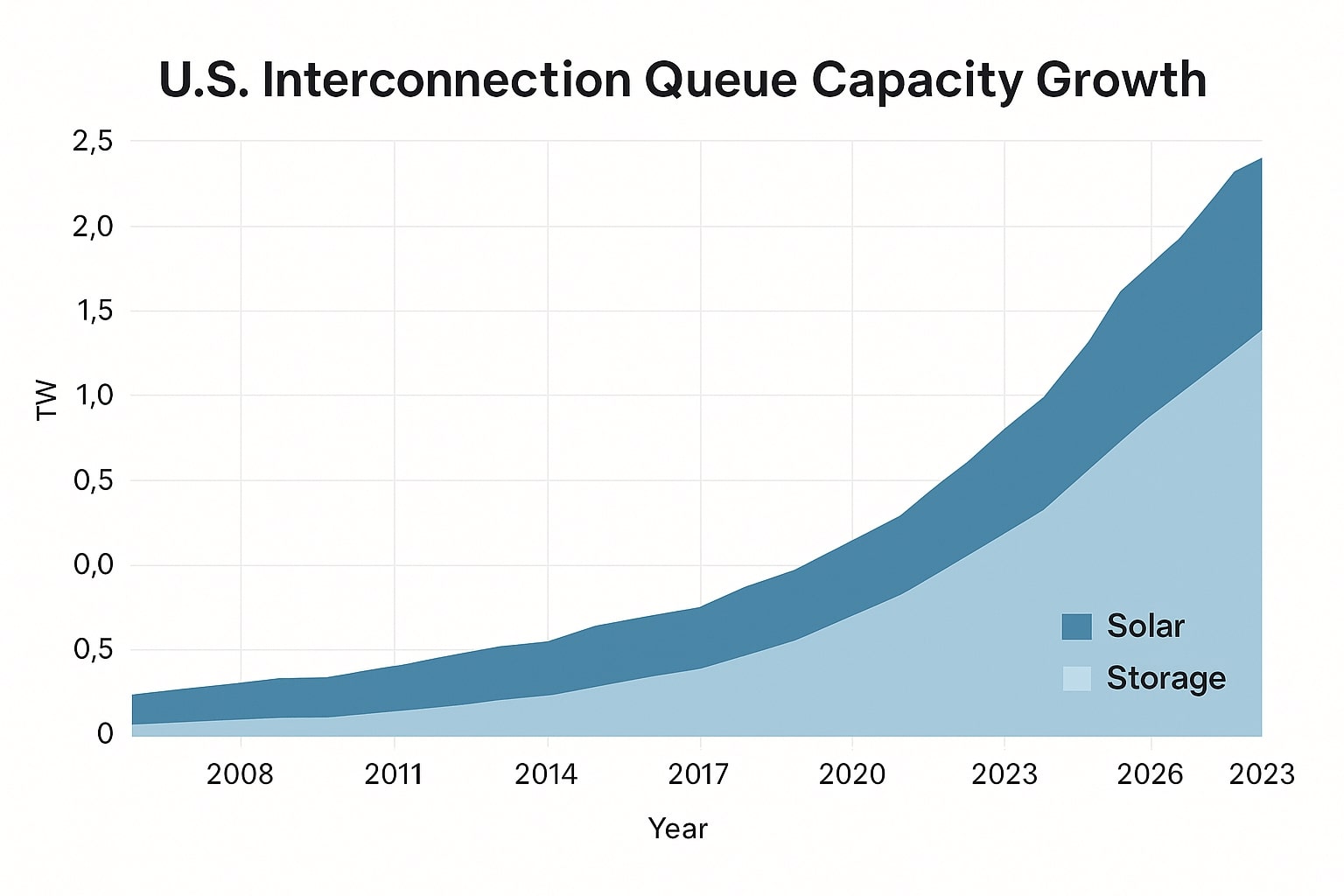
The scale and growth of waiting lists (interconnection queues) for generation and storage projects have surged dramatically in recent years. As of end-2023, about 2.6 TW of planned capacity was stuck in interconnection queues in the U.S. more than twice the existing generating capacity.Solar and battery-storage (or hybrid) projects dominate these queues: over 1 TW of solar capacity alone is waiting for grid interconnection approval.
But interconnection is not just about waiting: it’s also expensive. According to recent data:
- For some regions and time periods, interconnection costs have more than doubled. Projects completed between 2020–2022 saw higher costs than those before 2019.
- In certain high-demand zones (e.g., parts of PJM, a large Regional Transmission Organization), cost growth has been especially severe network upgrade requirements alone sometimes drive up the cost per kilowatt (kW) dramatically.
- Projects that eventually withdraw from the queue often face the highest costs: for example, withdrawn projects have incurred mean interconnection costs as high as US$ 599/kW.
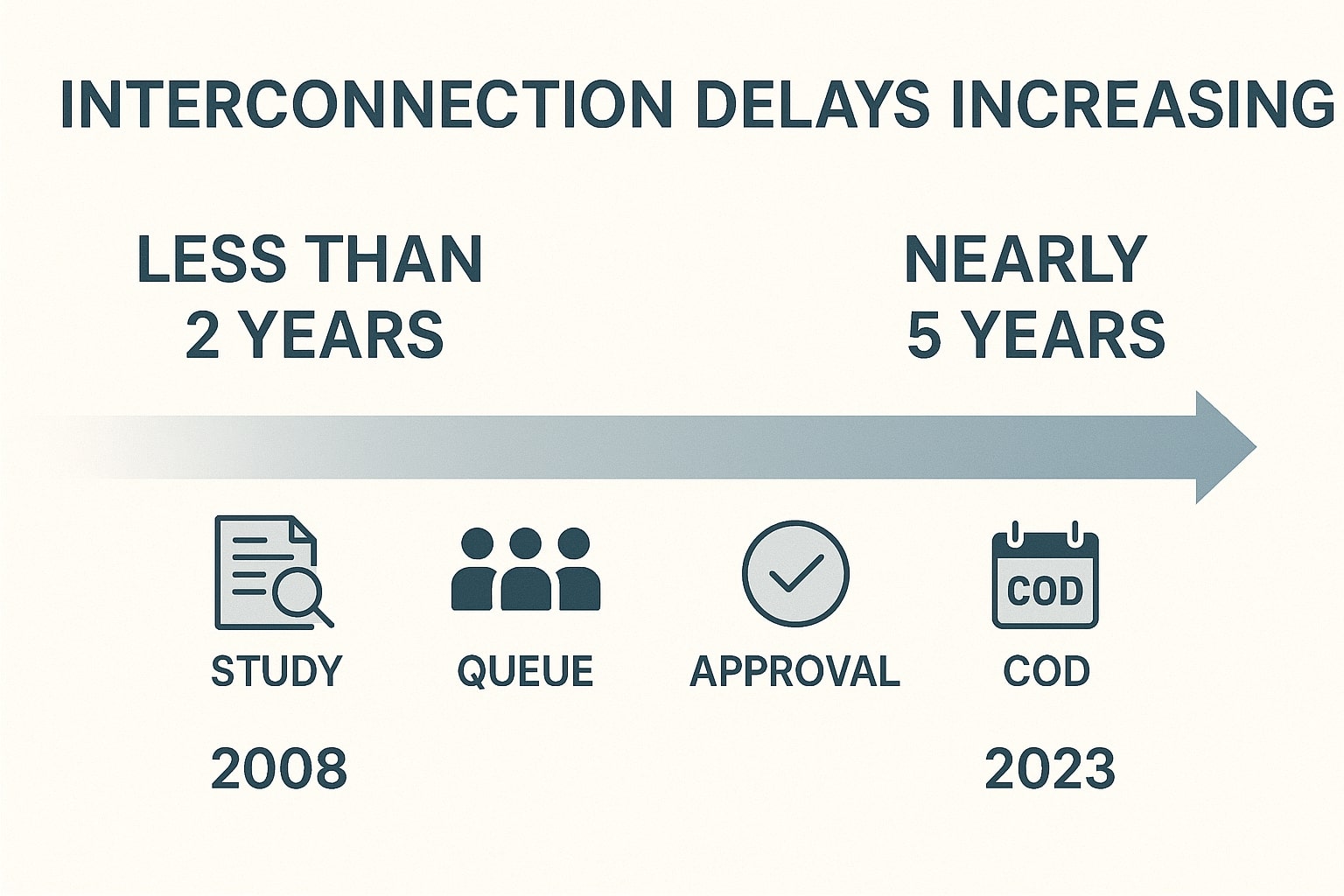
Meanwhile, delays are also growing: on average, projects that became operational in 2023 spent nearly five years from interconnection request to commercial operation up from less than two years in 2008.
This confluence of rising costs and protracted timelines means that interconnection once a modest line item can now be a make-or-break factor for project economics. Without early and careful planning, developers risk cost overruns, long delays, or even project cancellation.
Thus, managing interconnection risk early is no longer optional it’s essential.
How Early-Stage Planning Can Cut 20–40% (or More) Off Interconnection Costs
Based on recent industry findings and evolving grid-connection practices, here are several strategies developers can adopt early in the project lifecycle to reduce costs by as much as 20–40% (and in some cases even more) compared to a “reactive” approach.
- Conduct accurate, high-quality interconnection studies upfront
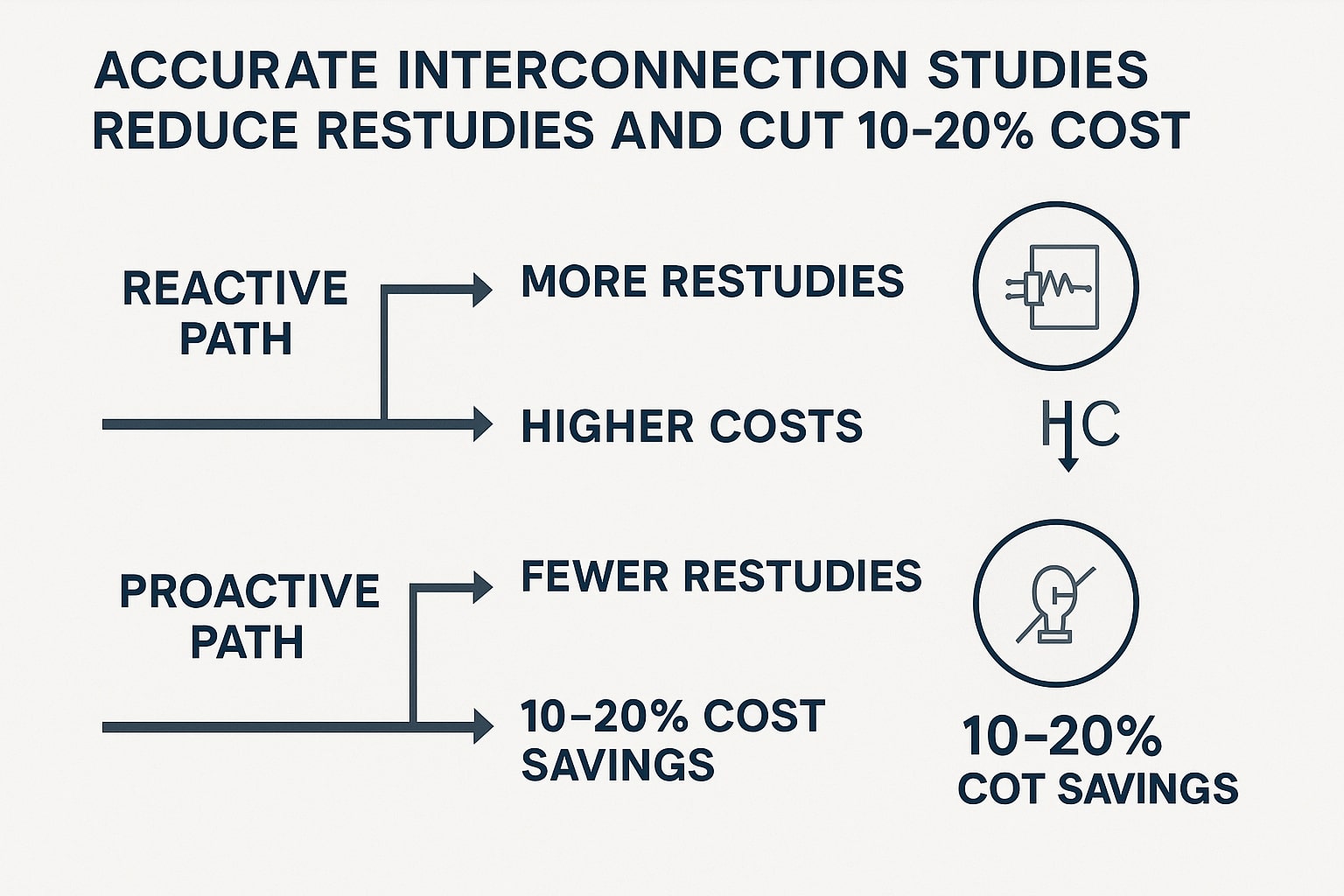
- Many interconnection applications contain errors or omissions that trigger restudies delays which also increase costs. Reports suggest that over 90% of applications need revisions because of such issues.
- By investing upfront in precise modeling load flow studies, realistic generation and load projections, detailed site layouts developers can avoid costly restudies, reduce uncertainty, and prevent unnecessary network upgrades. As one industry note puts it: “Accurate interconnection studies can lower grid costs.”
- In quantitative terms: avoiding restudies and unnecessary upgrades can easily shave off 10–20% of interconnection-related expenditure, especially in congested zones.
- Consider “flexible interconnection” (or partial/curtailable interconnection) instead of firm interconnection
- Traditional “firm” interconnection where a generator is guaranteed full dispatch and grid access can trigger large transmission-upgrade bills. But new studies show that flexible interconnection (also called “connect-and-manage” or curtailment-based interconnection) can reduce costs by up to ~70% and shorten the timeline dramatically.
- For example, some solar-plus-storage projects under “energy resource interconnection service” (ERIS) avoided costly grid upgrades, because the system accepted that the plant might be curtailed occasionally to avoid overloads.
- For many developers particularly in saturated grids this can translate into 20–40% lower interconnection costs compared to firm-connection upgrade-heavy scenarios. And since the trade-off is occasional curtailment (often small in real-life operations), the impact on revenue can be modest.
- Optimize project sizing and co-locate storage with generation when beneficial
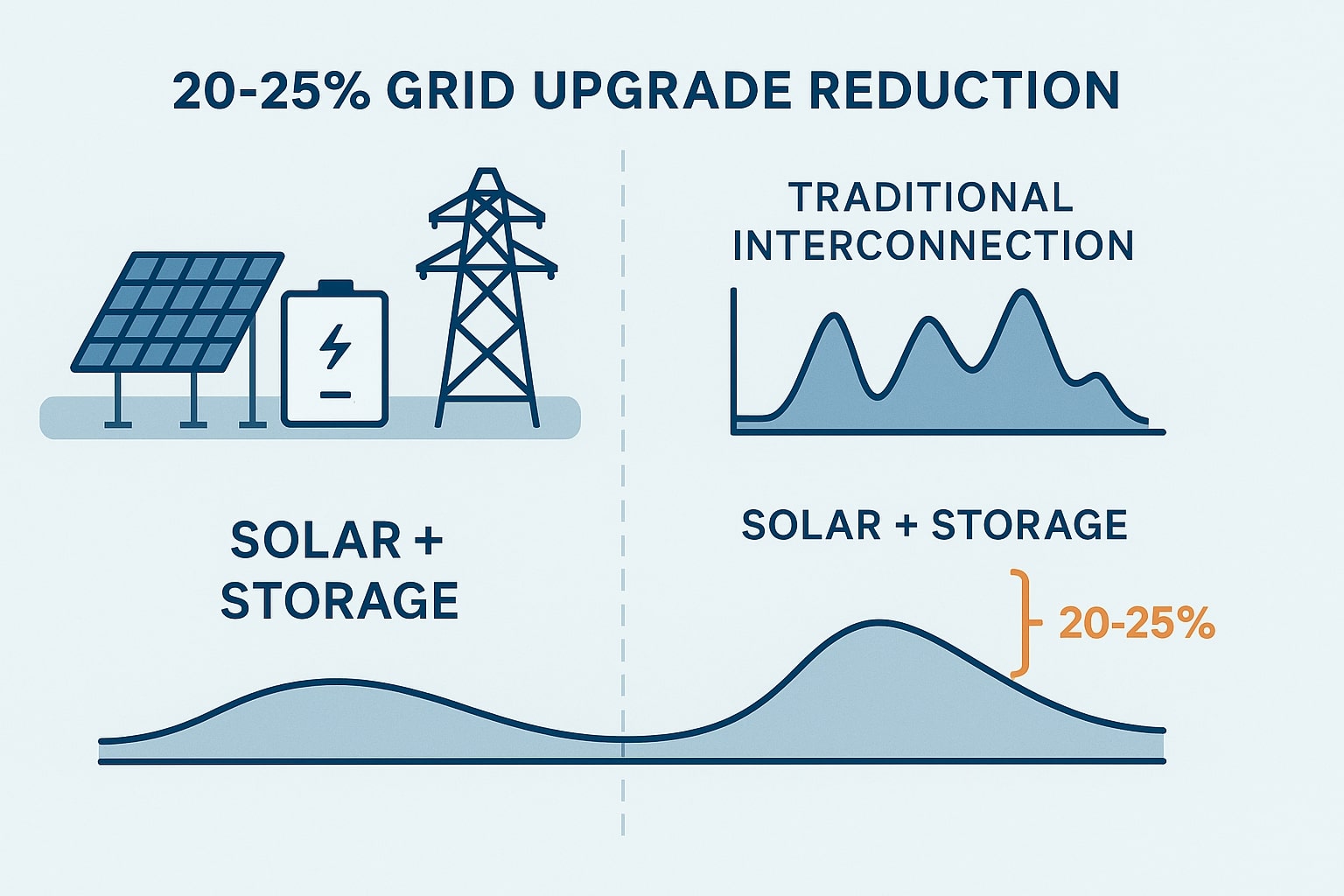
- Recent academic modeling shows that co-optimizing generation (e.g. solar or wind) and storage and sizing the capacity relative to the interconnection capacity can reduce total required grid upgrades by 20–25%, and reduce long-distance transmission expansion by as much as 12–31%.
- In practice: sizing PV or wind capacity conservatively (or factoring in oversizing behind inverters), and co-locating batteries, can decrease the load on the transmission network, reducing the need for costly reinforcement or new lines/substations.
- For developers planning storage + generation projects, thoughtful co-location and sizing can thus yield 10–30% grid-connection cost savings, depending on regional grid constraints and capacity factors.
- Engage early with grid operators/ISOs and aim for “first-ready” or accelerated interconnection queues
- With rising demand for grid connections, many grid operators have shifted to “clustered,” “first-ready, first-served,” or expedited study processes rather than simple chronological order based on application date.
- By ensuring that paperwork, site control, permitting, and application completeness are all locked down before filing, developers can position themselves for quicker processing. That reduces both time in queue and exposure to potential cost escalations driven by future network upgrades.
- Projects that wait longer in queues not only face risk of higher upgrade requirements (as grid becomes more congested) but also face rising deposit/bond requirements.
- Plan for scalable (or modular) build-out rather than “big-bang” leverage economies of scale
- Data show that interconnection costs per kW tend to decline for larger projects (economies of scale). For example, in one dataset: small solar projects paid about US$ 237/kW, mid-size about US$ 194/kW, while large projects saw costs around US$ 120/kW.
- That suggests that, when possible, consolidating capacity into larger, well-designed projects rather than many small ones helps spread fixed interconnection‐upgrade costs over more generation, reducing per-unit cost.
- Conversely, for storage-heavy or modular projects, developers might combine several sub-units under a common grid connection (if permitted), achieving similar cost benefits while maintaining flexibility.
Risks, Trade-offs and Why “20-40% Savings” Is Not Guaranteed
While the strategies above can yield substantial savings, several caveats and risks remain and it’s important to be balanced and realistic.
- Curtailment and output risk: Flexible interconnection might lower upfront costs but if curtailment happens frequently (e.g., when the grid is congested), it reduces effective generation of output and revenue, potentially offsetting savings. The actual curtailment rate depends heavily on grid conditions, load patterns, and future deployments.
- Regulatory and market uncertainty: Policies around interconnection (e.g., requirements for grid upgrades, eligibility of flexible interconnection, treatment of storage) vary across regions and evolve so what works in one region or at one point may not work later.
- Site- and grid-specific constraints: In heavily constrained transmission zones, even well-designed projects may trigger expensive upgrade needs. In some regions, nearby lines may already be saturated or upgrades may require long lead-times or new rights-of-way.
- Scale and financing limitations: While larger projects lower per-kW cost, they require more capital, longer development cycles, and more upfront risk. Smaller developers may find it difficult to aggregate or scale.
- Uncertainty over long-term grid growth: Co-locating storage or oversizing resources assumes certain future demand/generation profiles which may shift with changing energy markets, policy, or technology. Over-optimistic sizing can lead to underused capacity or stranded assets.
Because of these factors, the 20–40% interconnection cost savings is more of a realistic range under favorable conditions (good planning, grid flexibility, storage co-location, competent queue management) not a guarantee for every project.
Recommendations for Developers: Integrating Interconnection Strategy Early
Given the potential upside and significant risk, it’s increasingly important that developers treat interconnection as a core pillar of project planning (not an afterthought). Here is a recommended roadmap:
- Pre-feasibility grid assessment Before committing to a site or signing PPA, perform a high-level grid-capacity and upgrade-needs screening. Include realistic estimates for network upgrade costs, potential curtailment, and compatibility with flexible interconnection.
- Early engagement with grid operator/RTO Reach out to the relevant grid operator before filing ask for latest hosting-capacity data, queue backlog stats, upgrade thresholds, and whether flexible interconnection is supported.
- Rigorous application preparation Ensure all documentation, site control, technical drawings, load/generation forecasts, and interconnection-study inputs are clean and error-free to avoid restudies and delays.
- Optimize project sizing and structure Evaluate whether a larger aggregate project or modular approach makes sense. Consider co-locating storage (even if not immediately needed) to improve interconnection of economics.
- Use flexible interconnection when suitable Especially for solar + storage projects, or as a trade-off between upfront cost and occasional curtailment, flexible interconnection may offer the best path to viability in congested grids.
- Model sensitivity & risk scenarios early Given uncertainty (grid evolution, policy), run sensitivity analyses (e.g., Monte Carlo modeling) to see how cost, curtailment, time-to-operation, and revenue vary under different assumptions.
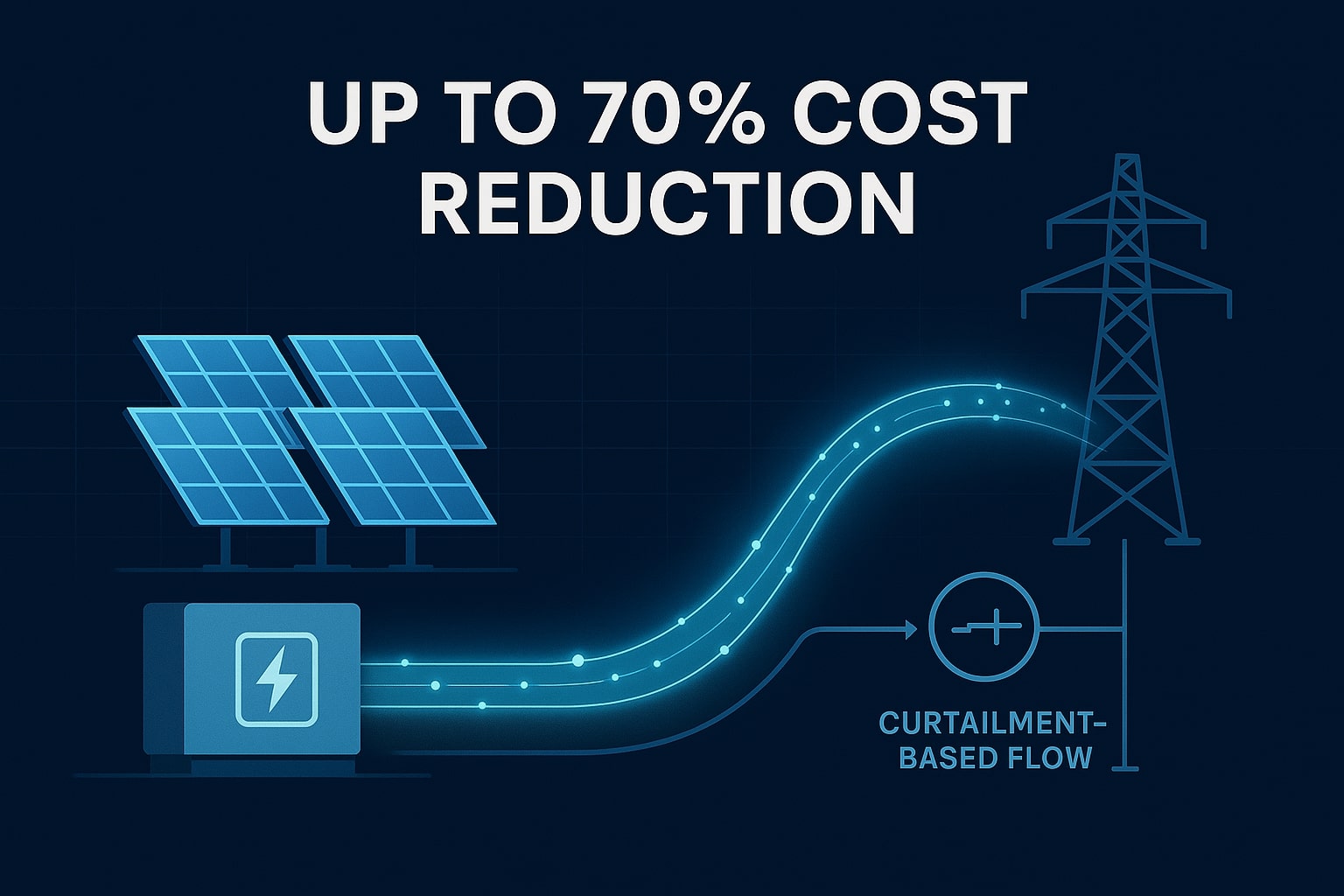
Interconnection costs and delays once considered peripheral to project economics have become a central challenge for renewable energy developers and grid-edge projects. With interconnection queues swollen, average waits stretching to five years, and cost per kW for network upgrades skyrocketing. A “business-as-usual” approach threatens both the viability and the timing of many projects.
But by treating interconnection as a core engineering and financial variable from day one, developers can realistically reduce interconnection costs by 20–40% (or more). Strategies such as upfront high-quality studies, flexible interconnection, storage co-location, and smart project sizing combined with early engagement with grid operators enable projects to avoid costly upgrades, shorten queues, and improve overall return on investment.
Especially in today’s climate of strained grids and tight regulatory scrutiny, integrating interconnection strategy early isn’t just best practice; it may be the difference between a successful project and a stalled one.